


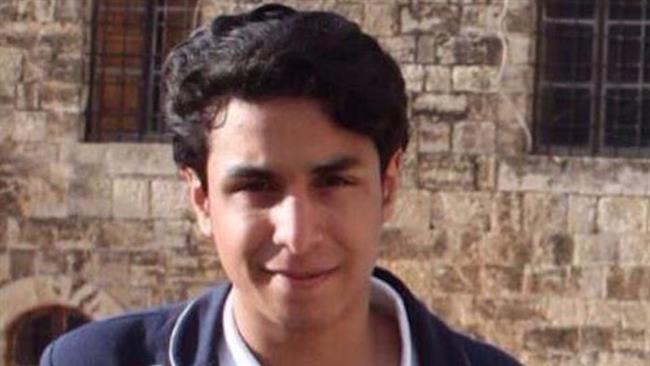



Juvenile in Yemen Executed
- Details
- Created on 13 March 2013
Despite pleas from the international community including the European Union, Human Rights Watch, Amnesty International and letters from Stop Child Executions President, we are sad to inform you that officials in Yemen carried out the execution of juvenile Mohammad Abdal-karim Mohammad Haza on March 9th 2013.
Yemen: Halt Execution of Alleged Juvenile Offender
Juvenile Status Should Not be in Doubt
Source:
http://www.hrw.org/news/2013/03/08/yemen-halt-execution-alleged-juvenile-offender
MARCH 8, 2013
(Beirut) – President Abdu Rabu Mansour Hadi ofYemen should immediately halt the scheduled execution of a man who may have been under 18 at the time of the alleged crime, Human Rights Watch said today. Mohammad Abd al-karim Mohammad Haza`a is due to face a firing squad on the morning of March 9, 2013.International treaties to which Yemen is a party, as well as Yemen’s penal law, specifically prohibit the execution of anyone convicted of committing a crime as a child – that is, under age 18. International law requires that in cases in which the age is uncertain, the person should have the benefit of the doubt.UNICEF, the United Nations children’s agency, has requested more time to assess conflicting documentary evidence relating to Haza`a’s age.“President Hadi should postpone Haza`a’s execution at least until the full facts of his age are known,” saidPriyanka Motaparthy, child rights researcher at Human Rights Watch. “Such an irreversible punishment should never be carried out while there remains any credible doubt about whether the accused was a child at the time of the crime.”Haza`a was convicted of a murder committed in August 1999. On July 11, 2000, the Court of First Instance in Taizz found that he was 17 at the time of the crime and sentenced him to prison and the payment of diya (blood money), in accordance with the requirements of Yemen's domestic laws governing sentences for juvenile offenders.The Appeals Court upheld the conviction but by a two-to-one majority amended the sentence, imposing the death penalty. The dissenting judge refused to sign the decision, citing his belief that Haza`a was under 18 at the time of the crime.Nevertheless, Yemen's Supreme Court confirmed the death sentence on April 14, 2008, without re-examining the issue of Haza`a's age. Yemen's president at that time, Ali Abdullah Saleh, signed Haza`a’s death warrant later that year.“President Hadi should uncover the truth about Haza`a’s age and not be bound by the decision of his predecessor,” Motaparthy said.International law prohibits the death penalty for crimes committed by anyone under 18. The UN Committee on the Rights of the Child, an international expert body, stated in its General Comment No. 10 of 2007 on children’s rights in juvenile justice that, “If there is no proof of age, the child is entitled to a reliable medical or social investigation that may establish his/her age and, in the case of conflict or inconclusive evidence, the child shall have the right to the rule of the benefit of the doubt.”Human Rights Watch released a report on March 4 about the use of the death penalty against juvenile offenders in Yemen, documenting how low birth registration, imprecise medical forensic age determination techniques, and faulty rulings by judges result in the continued executions of people who committed crimes under age 18.Yemen is one of only four countries known to have executed juvenile offenders in the past five years; the others are Iran, Saudi Arabia, and Sudan.Human Rights Watch opposes the death penalty in all circumstances as an inherently irreversible, inhumane punishment.
Juvenile in Yemen granted stay of execution
- Details
- Created on 14 February 2013
Source: Amnesty International
Muhammad Abdul Wahhab Faysal al-Qassem, has been granted a stay of execution by the Yemeni President on 6 February, he had been informed that he would be executed on 10 February. His age at the time of his alleged crime has been a cause of dispute. He told Amnesty International that the courts dismissed his birth certificate, which indicated he was under 18 and instead relied on falsified school certificates and a 2004 medical examination conducted to “prove” he was over 18. He insists the examination did not actually take place. The Yemeni judicial authorities are expected to review his case and take new steps to verify his age.
Problems in determining the age of alleged juvenile offenders such as Muhammad Abdul Wahhab Faysal al-Qassem are endemic in Yemen. In many areas of the country birth certificates are not issued to or sought by families, creating confusion regarding the age of young alleged offenders. In cases where the age of an alleged juvenile offender is in doubt, Yemeni courts rely on medical examiners, named by the prosecution, who in many cases have been accused of drawing biased conclusions supporting the prosecution.
In June 2012, the Yemeni Ministry of Justice established an independent medical examination committee to determine ages of alleged juvenile offenders, especially in cases where birth certificates are unavailable. Despite support and funding from UNICEF and the European Commission, it lacked the appropriate legal status and jurisdiction and ceased to function within six months of its creation. It has not been involved in this case.
Please write immediately in Arabic, English or your own language:
n Welcoming the suspension of Muhammad Abdul Wahhab Faysal al-Qassem’s execution and the possibility to review his case, in light of evidence that indicates that he may have been under 18 at the time of the alleged offence;
n Calling for the commutation of his and all other death sentences, and for the relocation of prisoners under the death sentence to institutions of detention appropriate to their age and the offence committed;
n Calling on the Yemeni authorities to prevent the imposition of the death penalty regardless of age;
n Calling on the Justice Minister to reactivate the medical examination committee as a first step towards a comprehensive reform of the juvenile justice system, in line with UN Human Rights Council resolution 19/37;
n Urging the President to stop ratifying death sentences and establish a moratorium on all executions, with a view to completely abolishing the death penalty.
PLEASE SEND APPEALS BEFORE 27 MARCH 2013 TO:
President
His Excellency Abd Rabbu Mansour al-Hadi
Office of the President
Sana’a, Republic of Yemen
Fax: +967 1 274 147 (please keep trying)
Salutation: Your Excellency
Minister of Justice
His Excellency Murshed Ali al-Arashani
Ministry of Justice
Sana’a, Republic of Yemen
Fax: +967 1 222 015 (please keep trying)
Email: This email address is being protected from spambots. You need JavaScript enabled to view it.
Salutation: Your Excellency
And copies to:
Minister of Human Rights
Her Excellency Dr Houriah Ahmed Mashhour
Ministry of Human Rights
Sana’a, Republic of Yemen
Fax: +967 1 444 833 (please keep trying)
Email: This email address is being protected from spambots. You need JavaScript enabled to view it.
Please check with your section office if sending appeals after the above date. This is the second update of UA 23/13. Further information: http://www.amnesty.org/en/library/info/MDE31/001/2013/en and http://www.amnesty.org/en/library/info/MDE31/002/2013/en
Yemeni Juvenile Muhammad Abdul Wahhab Faysal al-Qassem at risk of imminent execution
- Details
- Created on 31 January 2013
YEMEN: A MAN AT RISK OF IMMINENT EXECUTION
source: Amensty Int UA 23/13 AI Index: MDE 31/001/2013 of 30 January 2013
Muhammad Abdul Wahhab Faysal al-Qassem is at imminent risk of execution after the President of Yemen ratified his death sentence. His age at the time of his alleged crime remains in dispute. He could be executed at any time in the next two weeks.
Muhammad Abdul Wahhab Faysal al-Qassem was sentenced to death on 14 February 2005 by the Court of First Instance in Ibb, 190 kilometres south of capital Sana’a. He was convicted of a murder he was alleged to have committed in February 1998. His death sentence was upheld by an appeal court in February 2009 and was confirmed by the Supreme Court in February 2012. It was recently ratified by the President of Yemen. He is being held in Ibb prison.
Muhammad Abdul Wahhab Faysal al-Qassem told Amnesty International that members of the General Prosecution visited him in prison this week and told him that the President has ratified his death sentence. He was also told that he had two weeks left to see his family, write a will, and seek a pardon from the family of the victim.
He maintains that he was under 18 years old at the time of the alleged offence. According to him, the court had determined that he was over 18 on the basis of falsified copies of his school reports and a medical examination in 2004 that Muhammad Abdul Wahhab Faysal al-Qassem says did not actually occur. The court judged that the copies of the birth certificate that he presented were forged.
Please write immediately.
* Call on the President of Yemen to halt the execution of Muhammad Abdul Wahhab Faysal al-Qassem.
* Ask them to commute the death sentence of Muhammad Abdul Wahhab Faysal al-Qassem, as well as those of all other prisoners under death sentence.
* Remind them that they are bound by international standards for fair trial in capital cases, including the right to be presumed to be under the age of majority when in doubt and the right to seek pardon or commutation of the sentence.
* Urge the President to stop ratifying death sentences and establish a moratorium on executions, with a view to completely abolishing the death penalty.
Here is the contact information you need:
His Excellency Abd Rabbu Mansour al-Hadi
Office of the President
Sana’a, Republic of Yemen
Fax: 011 967 1 274 147 (hard to reach)
Salutation: Your Excellency
Attorney General:
His Excellency Ali Ahmed Nasser al-Awash
Attorney General’s Office
Sana’a, Republic of Yemen
Fax: 011 967 1 374 412 (hard to reach)
Salutation: Your Excellency
Please send a copy to
His Excellency Khaled Mahfoudh Abdullah Bahah
Ambassador for Yemen
54 Chamberlain Avenue
Ottawa, Ontario K1S 1V9
Fax: (613) 729-8915
Minister of Human Rights:
Her Excellency Houriah Ahmed Mashhour
Ministry for Human Rights
Sana’a, Republic of Yemen
Fax: 011 967 1 444 833 (hard to reach)
Email: This email address is being protected from spambots. You need JavaScript enabled to view it.
Salutation: Your Excellency
Additional Information
Amnesty International has long-standing concerns about the use of the death penalty in Yemen, particularly as death sentences are often passed after proceedings which fall short of fair trial. In 2012, a large number of offenders were sentenced to death and dozens were executed.
Yemen has made significant progress in the prohibition of the use of the death penalty against juvenile offenders (those convicted of crimes committed when they were under 18 years of age). It ratified the Convention on the Rights of the Child in 1991. At the time, the prohibition of the use of the death penalty against juveniles was limited to offenders below the age of 15 at the time of the crime. However, this was extended in 1994 to include individuals below the age of 18 at the time of the commission of capital offences. This was stipulated in Article 31 of the Penal Code, Law 12 of 1994, and marked progress to bringing Yemen’s laws into line with both Article 37 of the Convention on the Rights of the Child and Article 6 of the International Covenant on Civil and Political Rights, to which Yemen is also a state party. Both treaties categorically prohibit the use of the death penalty against anyone under 18 years of age at the time of commission of any crime.
However, some courts in Yemen continue to impose the death penalty for alleged offenders who may have been below the age of 18 at the time of the offence. Amnesty International is aware of at least 26 people who are possible juvenile offenders under sentence of death in Yemen and 200 such individuals who are at risk of being sentenced to death.
In a large number of areas of Yemen, birth certificates are not issued or sought by families, creating confusion around the date of birth of alleged young offenders. Prosecutors typically hire medical examiners who in many cases have been accused of drawing biased conclusions that support the prosecution’s view on the age of the defendant.
An official medical examination committee was formed in 2012 to determine the age of alleged juvenile offenders, especially in cases where birth certificates are unavailable. The medical committee, which has been supported and funded by the UNICEF and the European Commission, has so far been unable to carry out effective work, due to a lack of appropriate legislation or definition of its status. It was not involved in the case of Muhammad Abdul Wahhab Faysal al-Qassem.
Amnesty International believes that governments should apply a full range of appropriate criteria in cases where there is dispute over whether an alleged offender was over or under 18 years of age at the time of the offence. Good practice in assessing age includes drawing on knowledge of physical, psychological and social development. Each of these criteria should be applied in a way that gives the benefit of doubt in disputed cases so that the individual is treated as a juvenile offender and accordingly that the death penalty is not applied. Such an approach is consistent with the principle that the best interests of the child shall be a primary consideration in all actions concerning children, as required by Article 3(1) the Convention on the Rights of the Child.
The Human Rights Council on 23 March 2012 adopted resolution 19/37 on Rights of the Child, in which it urged States, “to presume children alleged as, accused of or recognized as having infringed the criminal law to be under the age of majority when their age is in doubt until such an assumption is rebutted by the prosecution, and to treat the accused as a juvenile if the burden is not met.”
Amnesty International acknowledges the right and responsibility of governments to bring to justice those suspected of recognizably criminal offences, but is unconditionally opposed to the death penalty in all cases as the ultimate cruel, inhuman or degrading punishment, and as a violation of the right to life.
Ali (Kianoush) Naderi executed
- Details
- Created on 18 January 2013
Iran executes alleged juvenile offender
Source: Amnesty International http://www.amnesty.org/en/news/iran-executes-alleged-juvenile-offender-2013-01-18
The execution in Iran this week of a 21-year-old man for a crime he allegedly committed while apparently still a juvenile shows a deplorable disregard for international law, Amnesty International said.
According to state-run media agency Mehr, Ali (Kianoush) Naderi was executed in Raja’i Shahr Prison in Karaj, north-west of Tehran on Wednesday.
He had been sentenced to death for his alleged role in the murder more than four years ago - when he was apparently still only 17 years old - of an elderly woman during the course of a burglary.
Those under the age of 18 at the time of their alleged offence are considered to be children under international law and their execution is strictly prohibited
Two other youths involved in the robbery received 15 years’ imprisonment each for theft convictions.
“Ali Naderi’s execution shows Iran’s deplorable disregard for international standards on the death penalty,” said Ann Harrison, Deputy Director of Amnesty International’s Middle East and North Africa Programme.
“Iran is one of the very few countries in the world where executions of juvenile offenders are still carried out, in contravention of its international human rights obligations.
“The Iranian authorities must immediately end the use of the death penalty against juvenile offenders.”
Of the more than 500 people known to have been executed in Iran in 2012, at least one of them was an alleged juvenile offender, who was executed in public in March.
Despite this, the age of criminal responsibility in Iran is still “maturity”, meaning nine lunar years for girls and 15 lunar years for boys.
A state party to the International Covenant on Civil and Political Rights (ICCPR) since 1975, Iran ratified the Convention on the Rights of the Child (CRC) in 1994. The Committee on the Rights of the Child which oversees the CRC has stated that Iran’s reservation that it would not implement articles contrary to Islamic law“raises concern as to its compatibility with the object and purpose”of the treaty.
Proposed amendments to Iran’s Penal Code, which have not yet come into force, would end the use of the death penalty against juvenile offenders for some crimes such as drug trafficking, but not for murder.
In his most recent report in September 2012, Ahmed Shaheed, the UN Special Rapporteur on Iran called on the Iranian authorities to abolish capital punishment in juvenile cases.
In March 2013, Iran’s human rights record will be discussed by the UN’s Human Rights Council. Its continuing high rate of executions and the practice of executing juveniles for murder are two reasons why Iran’s human rights record remains a matter of international concern.
UN special rapporteur reports
- Details
- Created on 31 October 2012
The UN Special Rapporteur on the situation of human rights in the Islamic Republic of Iran (IRI) Dr. Ahmed Shaheed presents report on situation of human rights in the Islamic Republic of Iran to Third Committee of General Assembly member states. Full report here:
Excerpt from the report:
The Special Rapporteur also reiterates his concern about the implementation of the death penalty including in cases that do not meet the “most serious crimes” standards, as stipulated by international law. He calls on the Government to consider revisiting its qualification in the revised Islamic Penal Code on the use of capital punishment for juveniles and to consider prohibiting juvenile executions; and reiterates his call for a moratorium on the implementation of capital punishment sentences until such time as fair trial standards for capital cases can be adequately demonstrated.
More Articles...
- Report on Iran by Child Rights Lawyer Mohammad Mostafaei
- Patrick Okoroafor released from Nigerian prison!
- Child rights defender Narges Mohammadi arrested
- Video about defender of child rights, Lawyer Mohammad Mostafaei
- Hamid Ahmadi faces execution
- Iran Human Rights Annual Report on the death penalty
- Thank you Grant MacEwan University!
- UN's High Commissioner on Human Rights Speaks up on violence against children